If You Had Due Process, This Would Feel Different
Family court does not only affect parents legally. It affects them emotionally, mentally, and physiologically. Understanding due process is not just about law—it is about dignity, participation, and protection.
Before You File a Petition to Modify, Read This First
Many parents believe filing a petition to modify custody automatically creates protection. Sometimes, it opens the door to the very instability they were trying to prevent. This is what I wish more parents understood before walking into family court.
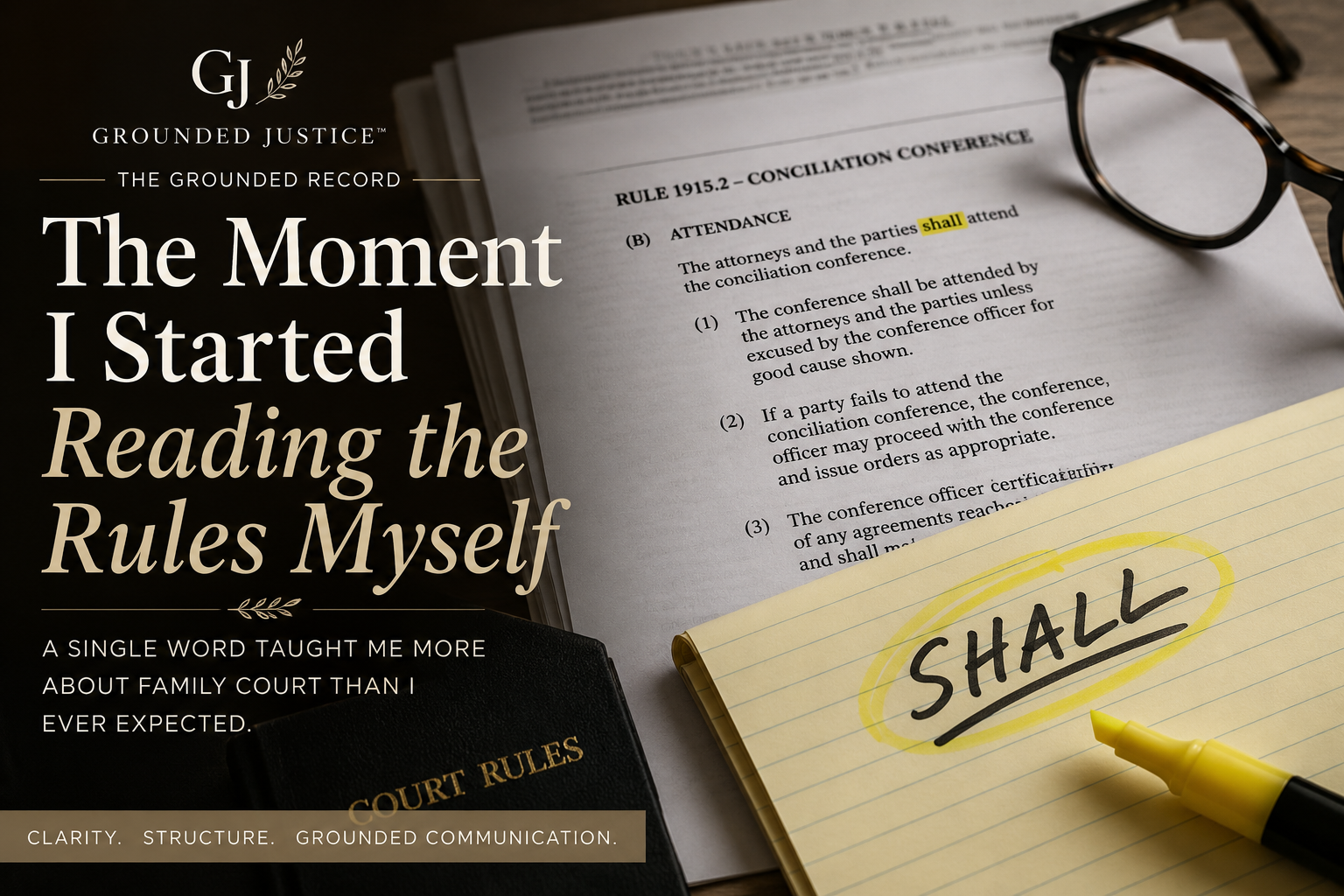
The Moment I Started Reading the Rules Myself
I never expected to spend my evenings reading court rules. But when a single word in a legal argument stopped me in my tracks, it forced me to confront a difficult reality: sometimes parents have no choice but to learn the system themselves. This is the story of one word, one question, and the moment I started reading the rules for myself.
What Courts Actually Listen For in Family Court
Most parents walk into family court believing their truth alone will protect them. But courts are not built to process emotion—they process structure. Here’s the courtroom framework that can help parents present facts clearly, strategically, and credibly.
Procedure Is Not the Same as Fairness in Family Court
Many parents walk into family court believing that procedure guarantees fairness. This blog explores procedural due process, parental constitutional rights, Troxel v. Granville, and why so many parents leave family court emotionally destabilized when procedure feels disconnected from fairness.